Make Spring come Alive in your garden or balcony each year!
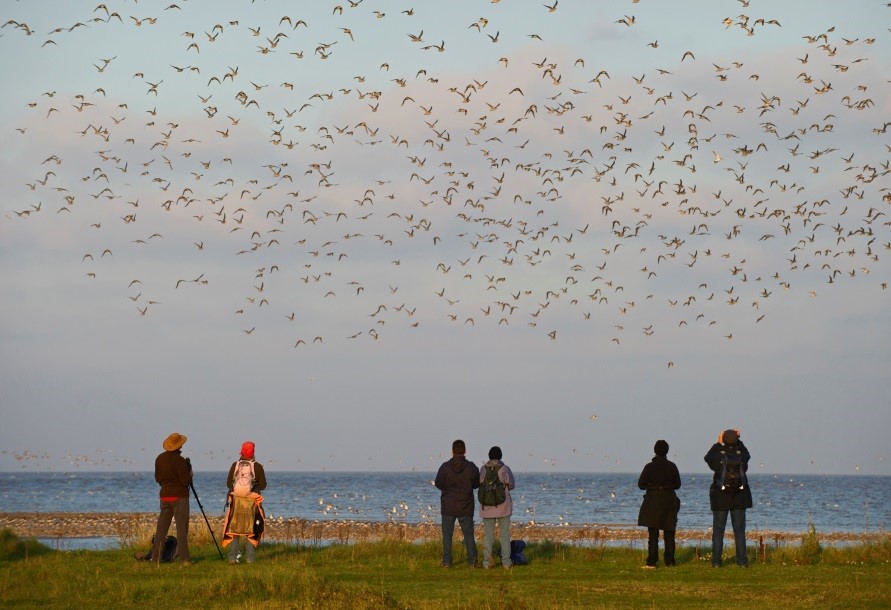
The arrival of migratory birds signals a change in seasons, when life is in full swing. Use this cue to get out and enjoy nature, and at the same time give something back.
Follow our advice and make simple changes to make your garden, balcony, or school bird-friendly.
Whatever time you have and whatever size space, you can take action for birds in your garden.
You might be lucky enough to get a visit from Spring Alive migratory bird species and be able to help them rest and refuel, but you will be sure to be rewarded by local wildlife thriving in your garden too.
Pretend your garden or balcony is your own nature reserve, and you are the warden.
If everyone makes their garden bird-friendly, imagine how much better birds and biodiversity will do!
And once you have done it – share it – show and tell us about your achievements on the Spring Alive facebook and flickr pages!
If you build it, they will come!
General Top Tips:
- Build or install a bird box!
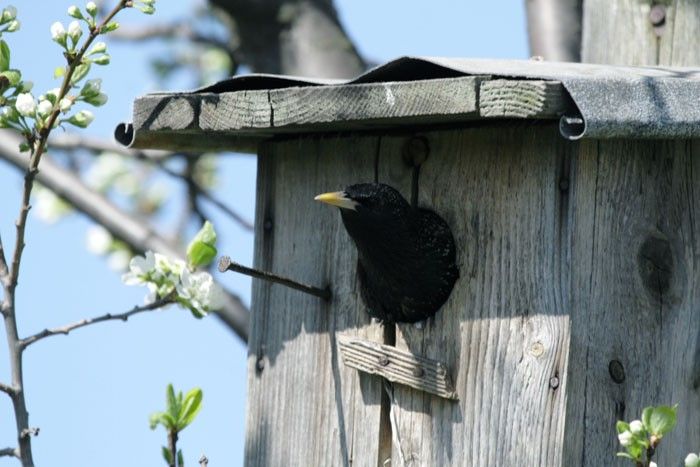
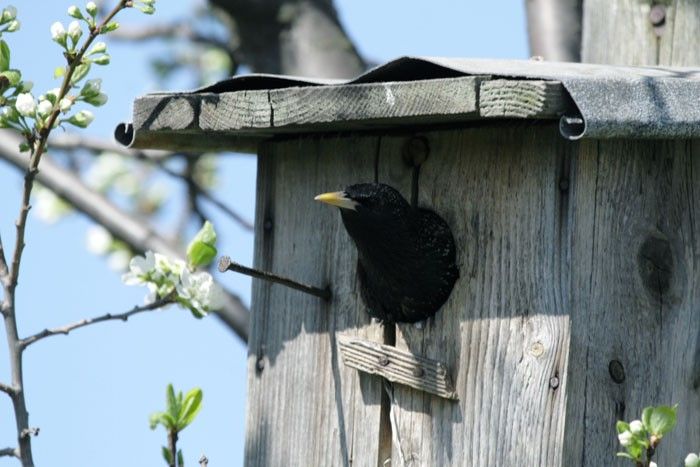
Starling in a nest box, photo by A. Kogut - Most gardens and houses today lack holes and spaces for birds to nest and rest safely away from predators or keep warm in the winter. Follow the links in below for advice on different nest boxes for different bird species.
- Keep the exterior either natural wood or light in colour to reflect heat, and never paint or finish interior walls.
- Location, location, location! Away from predators, sheltered from rain and sunlight.
http://www.springalive.net/world/springalive/nest-boxes
http://www.rspb.org.uk/Images/nestbox_tcm9-207414.pdf
http://www.rspb.org.uk/Images/Apple_bird_feeder_tcm9-166680.pdf
- Gardening for birds
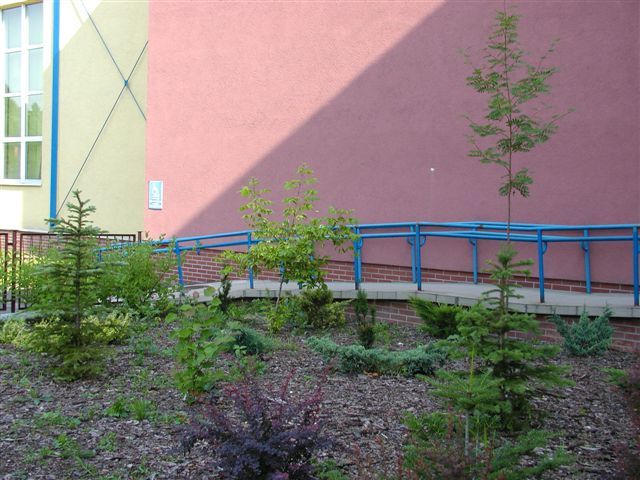
A bird corner at a school yard, photo by K. Fura - Maximise variety: the more species of flowering plant you have, the more animal species will feed on them and utilise them, and the more birds you will attract to your garden! Make sure the plant species are native to your country so you don’t cause problems with alien invaders!
- Give your grass cutter a rest!: leave patches of long grass and spread a wildflower mix to attract insects and birds.
- Avoid pesticides: pesticides kill everything – it is better to encourage birds and predatory insects like ladybirds, beetles and lacewings to naturally eat ‘pest’ insects and slugs. Pesticides build up in the food chain and water system and can poison many animal species.
- Plant a tree or shrub to help birds in the future. Plant whatever suits your space, even a climbing plant in a pot on a balcony: if it can provide shelter, a nest site or produces fruit or berries, you can’t go wrong!
- Check for nests before trimming your garden.
- More water = more wildlife = more birds!
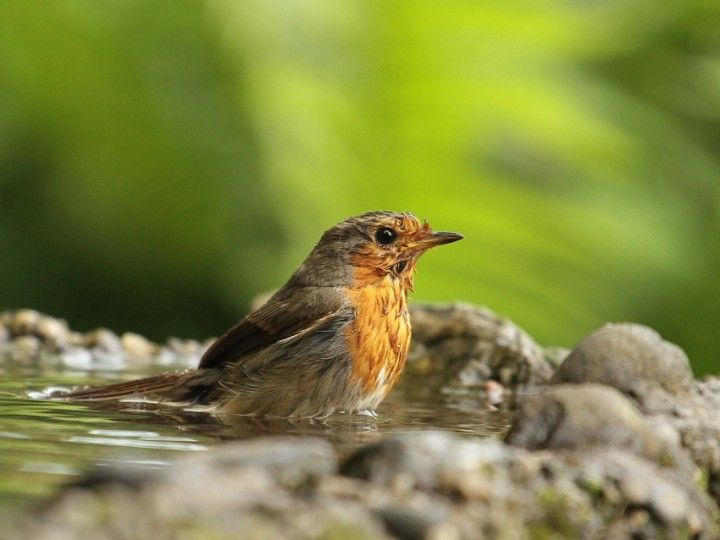
Robin in a bird bath, photo by B. Fraś - Build a pond: it is one of the best things you can do for wildlife in your garden.
- If a pond isn’t practical, don’t worry, birds love to use a simple bird bath! Clean once a week with a stiff brush and top up with fresh water every day. Bird baths need only to be a few cm deep and have a shallow slope. Raise on a pedestal if there are cats around!
- Food!
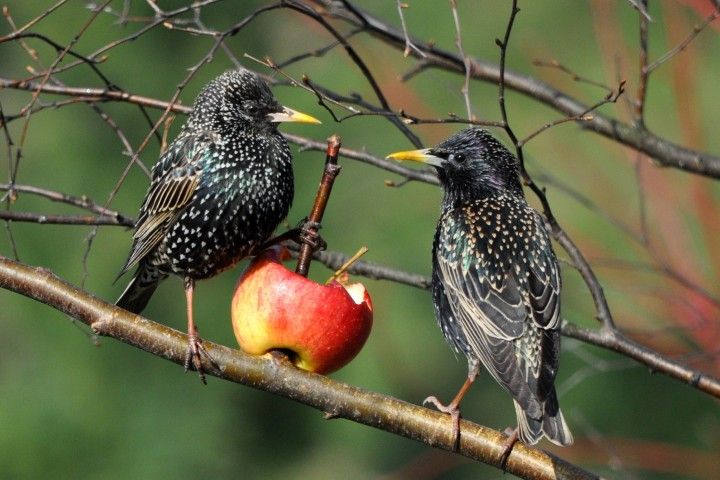
Feeding with an apple, photo by I. Strzebońska We all need a safe and reliable source of food, and it's the same for birds, too!
Feeding is a simple and cost-effective way of helping your garden birds. It really helps out when tired adults are raising chicks and surviving cold, hard winters.
http://www.springalive.net/world/springalive/feeding-birds
It's also a great way of seeing close-up the fascinating behaviour, amusing antics and individual characters of the birds in your garden and local area.
- Do not feed bread to birds! Old baked goods go mouldy and can harm birds. They also fill birds’ stomachs quickly without meeting their nutritional needs.
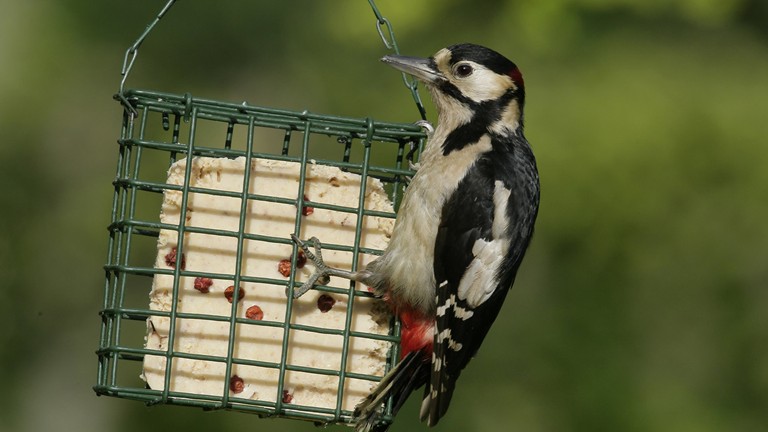
- Use a variety of seeds, chopped nuts, grains and chopped fruit. Ideal foods are: sunflower hearts, seed mixes, suet pellets, porridge oats and apples.
- Buy some bird feeders and hang them out of reach of cats.
- If not eaten, replace food regularly and clean feeders to stop them going rotten and spreading disease.
- You can even make a bird feeder from an old clean plastic bottle or from an apple!
http://www.rspb.org.uk/discoverandenjoynature/families/children/makeanddo/activities/birdfeeder.aspx
- Prevent Pet Predators
Control your pets! Cats are big killers of birds and their chicks, so bear this in mind when installing bird boxes and feeders. Keep your cats away from bird nests!
- Clean up litter
Birds can become tangled in plastic bags, string and other garbage – resulting in injury, death or easy predation. Birds will also eat small pieces of plastic thinking they are food, causing starvation and other big problems. Pieces of garbage can be built into birds’ nests and end up killing hatched chicks. So clean up litter in your area!
- Windows!
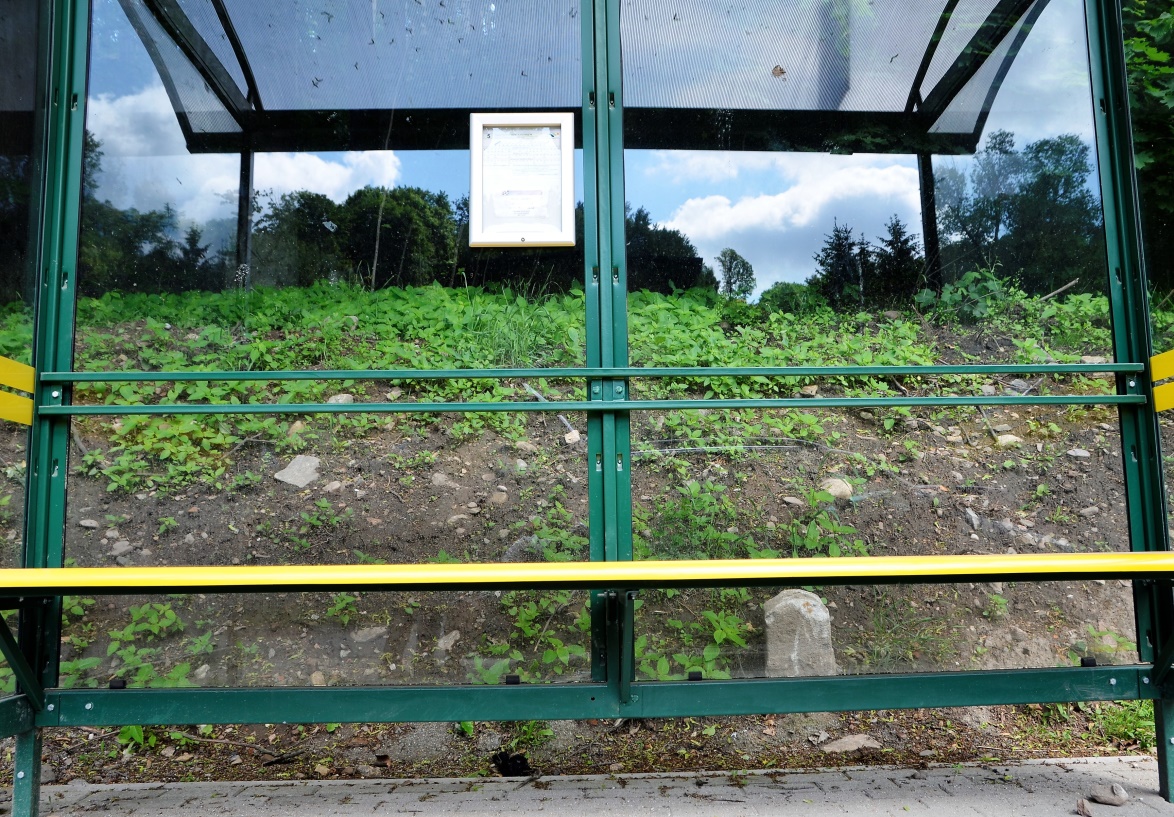
Put stickers or strips of colour or hang decorations on your windows to prevent birds from flying into your windows. You can even buy bird feeders that stick to windows!
http://www.springalive.net/world/springalive/birds-and-windows
Advice for balconies’ owners:
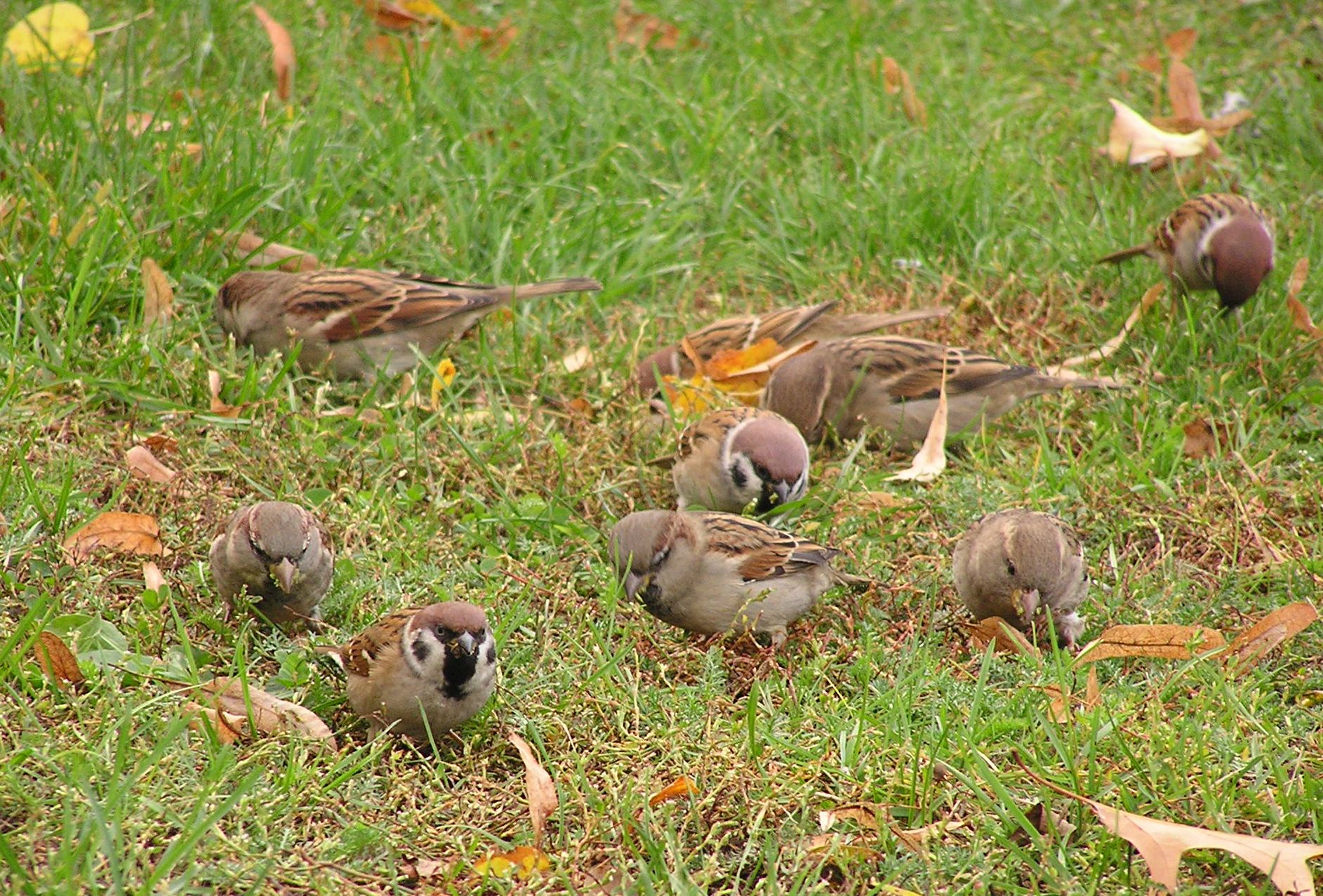 |
| Sparrows preying on a communal lawn, photo by M. Radziszewski |
- Lots of plants to encourage insects for birds to feed on, such as sweet-smelling lavender
- Buy bird-feeders that stick to windows
- Provide a small bird bath water source
- Group together with neighbours to make communal gardens bird-friendly
http://www.rspb.org.uk/makeahomeforwildlife/.../planting/tubs.aspx
http://www.rspb.org.uk/hfw/about/casestudies/balcony.aspx
Top tips for helping Spring Alive species:
Swift
Swifts are in trouble because of the destruction of nest sites they've used for years. With modern building techniques, house repairs, renovations and even demolitions removing the old cracks and crevices swifts use, they have nowhere left to go.
As swifts return to the same nesting site year after year, fitting a swift nestbox high on your house wall the best thing you can do to help these long-distance migrants.
http://www.rspb.org.uk/discoverandenjoynature/discoverandlearn/birdguide/name/s/swift/grounded.aspx
http://www.swift-conservation.org/Installing%20Swift%20Nest%20Boxes%202013%20(small).pdf
http://www.swift-conservation.org/EuropeHelp.htm
Barn Swallow
Make small holes (50 mm high and 200 mm wide, under your garage or barn roof eaves or leave a window or door open), and a make a shelf or platform in the corner for Swallows to get in and nest in the dark. Swallows can enter a building through a very small hole and need very little light.
Bee-eater
If you live in southern Europe and southern Africa, plant lots of native flower species to encourage bees and butterflies!
Cuckoo
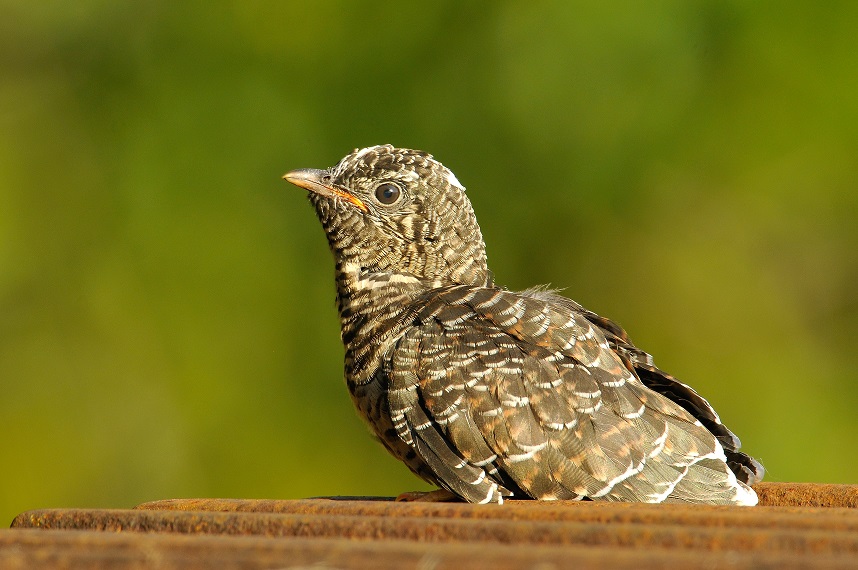
Planting hedges that help species such as Dunnock and Robin make a nest can help Cuckoos because they are host species. Honeysuckle, nettles, sallow are all good for caterpillars including some hairy ones, which Cuckoo love.
White Stork
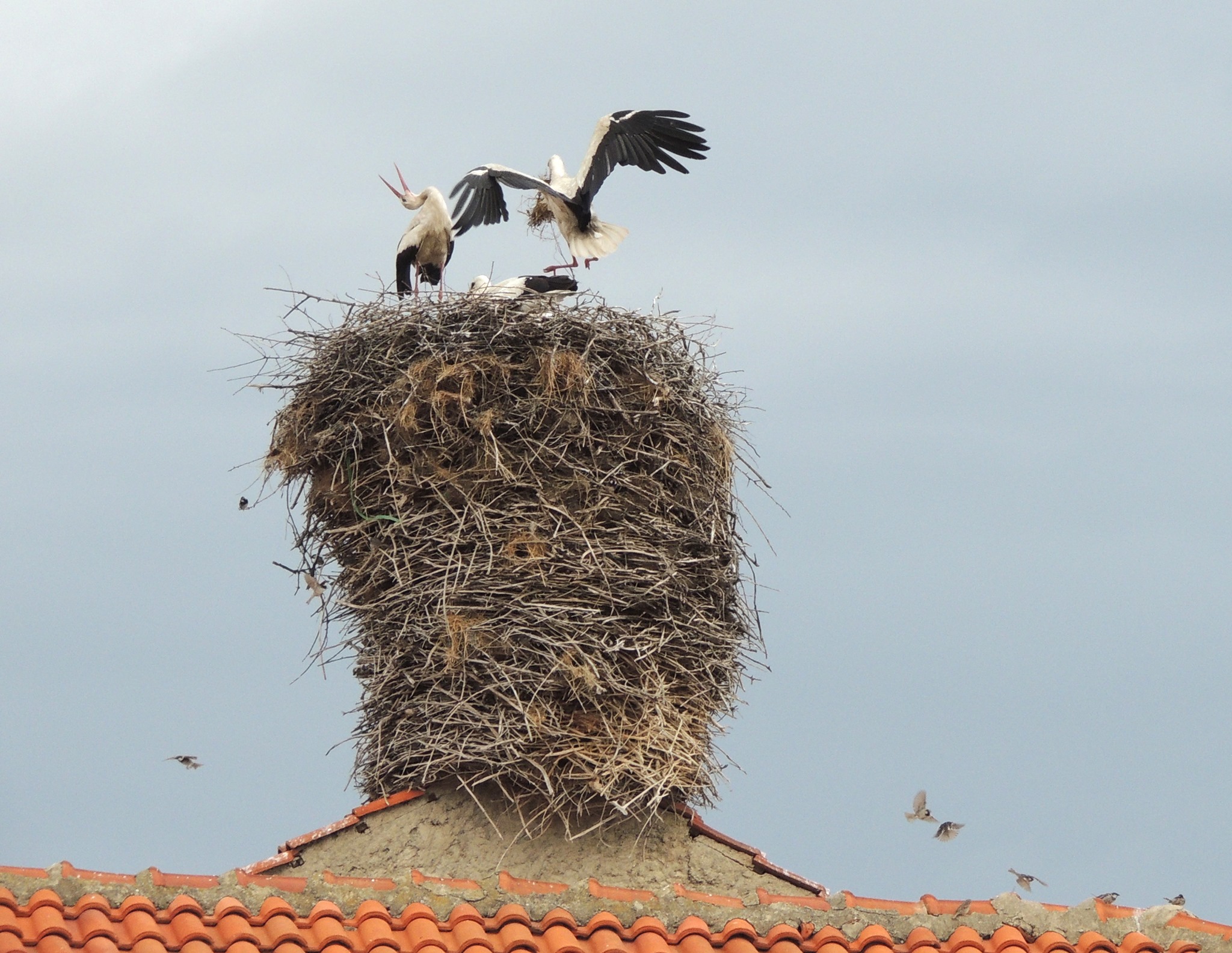
Stork return to the same nest year after year. If you are lucky enough to have a nest on your house, make sure to clean the nest of plastic and string after they have left in Autumn and before they return in Spring. Collect litter from the surrounding area so they do no use it in their nests.
http://www.springalive.net/world/springalive/cleaning-surroundings-of-storks-nests